



How do you review a hotel to tell whether it is really worth the money?
A hotel worth the money is not necessarily the cheapest or the one with the most stars. Value appears when the location, the sleep, the cleanliness, the service and the booking terms all match what this particular trip needs.
Start from the purpose of the stay
A work trip needs a desk, a stable connection and quick transport; a family holiday needs a larger room, soundproofing and convenient breakfast; a restful break values the view and the shared spaces. Without deciding the goal, every comparison goes wrong from the start.
List three must-haves and three nice-to-haves. This stops you paying extra for amenities you will not use, and helps you see that a cheap room missing something important is not actually a saving.

Judge the room by actually using it
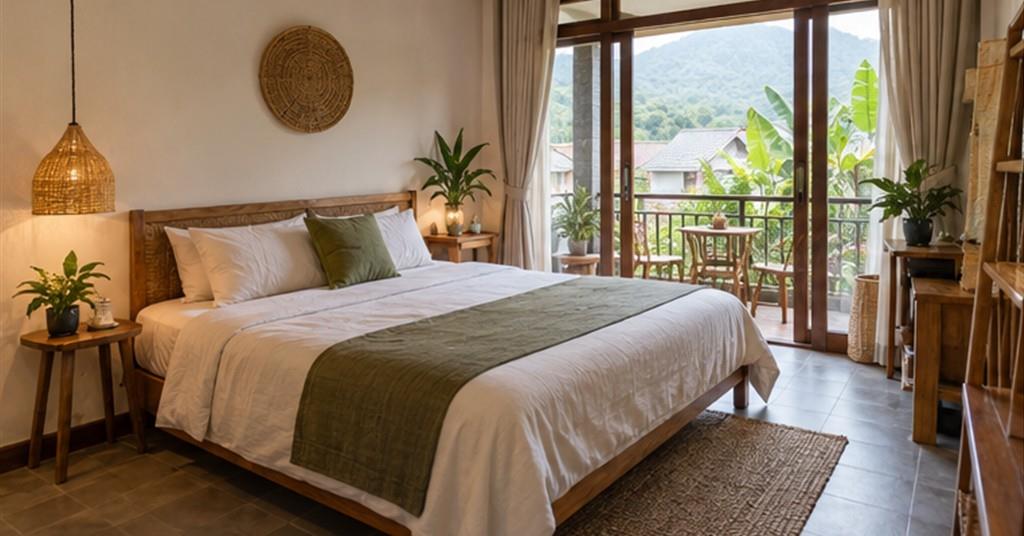
Check the smell, the noise, how clean the sheets and pillows are, the bathroom, the air conditioning, the curtains and the sockets. A wide-angle photograph can make a room look bigger, so a review should state the room type and how it felt to use rather than repeating marketing figures.
Sleep quality is a major criterion and often overlooked. Note the firmness of the mattress, the light that gets in, noise from the corridor and the temperature. These details are more useful than a general compliment like “nice room”.

Judge how the hotel handles problems
Mistakes happen at every price level. What is worth watching is the response time, the attitude, the solution and whether the guest had to ask repeatedly. A place that takes responsibility and fixes things quickly can be more trustworthy than one that looks flawless but ignores incidents.
If the problem is serious, keep photographs and communicate through official channels. Avoid filming a staff member's face close up and posting it straight away before giving them a chance to sort it out. A review carries weight through evidence and a clear sequence of events, not through harsh language.

Judging by criteria, not only by feeling
A useful review separates three layers: what the property promised, what the writer observed, and personal impressions. Location, size, amenities, noise, cleanliness, sleep quality and how problems were handled should all be described concretely. The phrase “not worth the money” only means something when the reader knows the rate, the booking date, the room type and what the guest needed.
Photographs should record both the good points and the shortcomings, without intruding on the privacy of staff or other guests. If something is wrong, tell the property and give them a chance to put it right before drawing conclusions. A mistake fixed quickly is not the same as a systemic failure that was ignored; a fair review needs to tell the two apart.
The room rate is only part of the total cost
You have to add taxes and fees, breakfast, parking, transport, extra-person charges, additional beds and the cancellation terms. A cheap room far from where you need to be can push the total higher. Conversely, a central location is not necessarily worth the money if the aim is a quiet rest. Comparisons must be made over the same dates, the same policies and equivalent room categories.
Before booking, save a screenshot of the terms, read recent reviews and contact the property to confirm anything that matters. Afterwards, state clearly when you stayed, since quality can change. A trustworthy review does not promise to decide for the reader; it supplies enough facts for each person to weigh things up.
A manageable way to begin
After the stay, score six items separately: location, sleep, cleanliness, amenities, service and total cost. Then write who the hotel suits and who it does not.
What matters is choosing an approach that fits your actual circumstances, watching how it goes and adjusting. A good plan does not have to be perfect the first time; it needs to be clear enough to start and flexible enough to keep going.
A good review does not decide for the reader. It makes clear what was received for the money paid, in the specific circumstances of one particular stay.



 Is a homestay worth staying in? Do not judge by the pretty room alone
 Three days in Quy Nhon: a plan for the sea, a fishing village and a real rest
 Central Vietnam's beaches after high season: quieter, but what should you watch for?
 Checking into a hotel: 12 things to look at before you open your luggage
 Visiting the Mekong Delta in the flood season: what to prepare for a safe and decent trip
 Madame Lan review, Da Nang: a Vietnamese meal by the Han river that suits families and larger groups
 A weekend in Cao Bang: which route keeps you from getting worn out?
 Coastal camping in Vietnam: reading the tide, avoiding strong wind and leaving no rubbish
Đăng nhập để bình luận: / Sign in to comment: