



Above is Heaven, Below are Suzhou and Hangzhou
A city of elegant beauty, where the scenery and people both bring a wonderful feeling. There are many scenic spots and tourist destinations, with the Classical Gardens of Suzhou being the most famous.


The night view on Shantang Street is extremely beautiful and unique, with large crowds enjoying the scenery and a wide variety of street food. This is a city well-suited for a peaceful and secluded life.


Suzhou, anciently known as Wu, Wudu, Wuzhong, Dongwu, and Wumen, is now simply called Suzhou. Suzhou's written history dates back over 4,000 years, and the city was established in 514 BC. It is one of China's 24 historical and cultural cities, a key national tourist city, one of the four key environmental protection cities in China, and a central city in the Yangtze River Delta.


In the 9th year of the Kaihuang era during the Sui Dynasty (589 AD), it was named Suzhou after Mount Zhou located southwest of the city, a name that has persisted to this day.


Suzhou is a center of cultural relics, industry, commerce, foreign trade, and economy for the Suzhou region, as well as a hub for culture, art, education, and transportation. There are numerous scenic spots in Suzhou, offering rich and diverse tourism resources. Among them, the Classical Gardens and Ancient Water Towns are world-famous. The classical gardens date back to the Spring and Autumn period in the 6th century BC.


Known as Suzhou has the finest gardens under heaven, the Classical Gardens of Suzhou are a comprehensive work of art combining architecture, mountains and rivers, flora, sculpture, calligraphy, and painting. They form a unified blend of natural and artistic beauty, creating a moving landscape painting from every viewpoint, full of winding paths and intricate twists.


Suzhou boasts not only its classical gardens, but also many ancient water towns, including Wujiang Tongli, Zhenze, Kunshan Zhouzhuang, Jinxi, Qiandeng, Taicang Shaxi, Liuhe, Guangfu, Dongshan, Mudu, and more.


The Suzhou Tourism Bureau is currently developing rural tourism models, such as Sanshan Island, Mingyue Bay, and Wangshan in Wuzhong District, Shushan in Gaoxin District, Lianhua Island in Xiangcheng District, and others. These villages are all beautiful, featuring rustic and charming countryside scenery, which has become a major highlight of Suzhou.


Ideal travel season: March to May and September to October. Suzhou has a subtropical monsoon climate, hot and humid with abundant rainfall, and four distinct seasons; spring is the most suitable time to travel.
As the weather changes, the scenery of Suzhou's gardens alters as well, featuring flowers that bloom seasonally.
Recommendation: A trip of 2 to 6 days is recommended.


[i]Source: Translated by Ola88[/i]



 Peruvian ceviche: the sea, lime and the moment freshness decides everything
 Swedish fika: why a cup of coffee can become a social pause
 Polish pierogi: small folds of dough and the memory passed around a kitchen table
 Jamaican jerk: the scent of pimento, the smoke pit and a community's living heritage
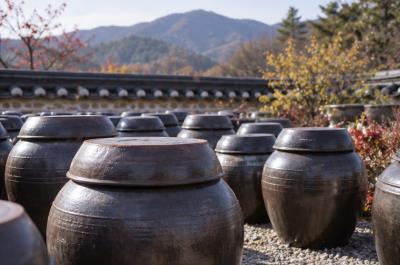 Korean kimchi and banchan: the craft of fermentation and a table built on sharing
 Persian rice and tahdig: saffron, a crisp bottom layer and the sofreh
 Moroccan couscous and tagine: rhythm, hospitality and the flavours of North Africa
 Brazilian feijoada: a pot of black beans, a weekend lunch and a story with many roots
Đăng nhập để bình luận: / Sign in to comment: