



Island-hopping by boat in Vietnam on your own: keeping the plan flexible when the sea turns
An independent island trip does not begin at the pier; it begins with what you will do if the boat is delayed. Weather at sea can change the schedule both out and back, so tickets, luggage and a buffer day have to be counted as part of the journey.
This article focuses on principles of preparation and decision-making; it does not replace guidance on the ground. Road conditions, weather, transport timetables and local rules can all change, so check again with whoever manages the area before you go.
Understanding the journey properly
Routes to Vietnam's islands differ in the type of vessel, the duration, the luggage rules and the departure port. A published timetable is not a promise that the boat will run in all conditions; safety decisions by the authorities and the operator have to be respected.
Do not schedule the return boat right up against a flight, a train or an important event. A buffer suited to the season and the route keeps you from having to accept a dangerous or expensive option when the sea turns bad.
Preparing before you set out
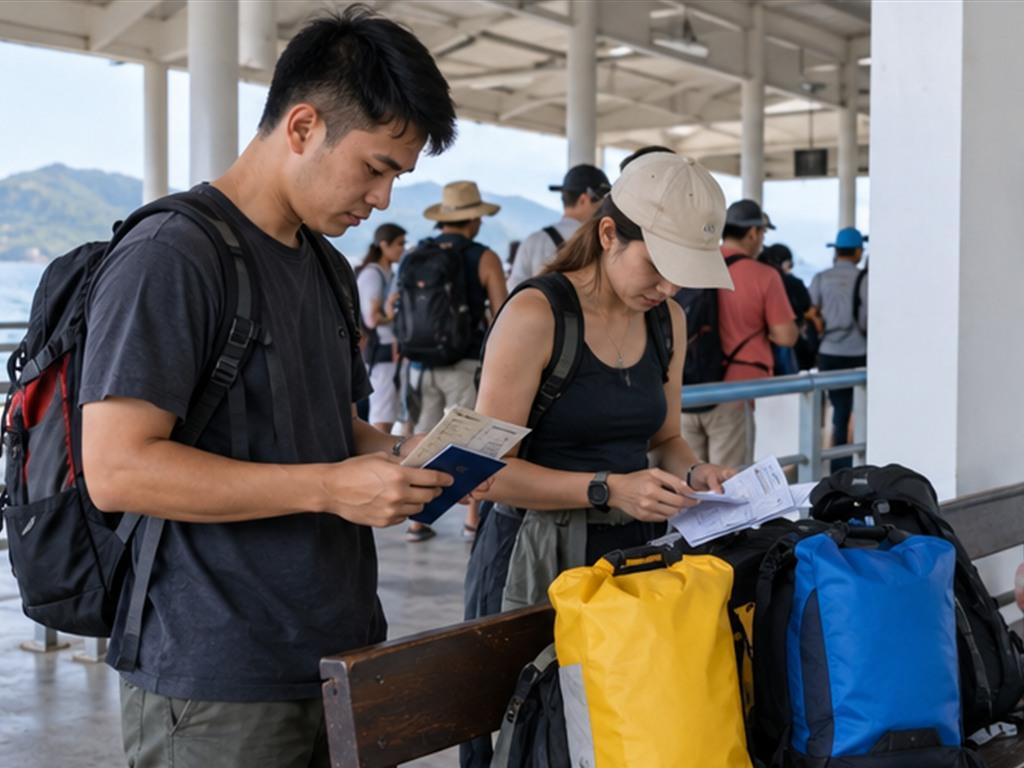
Buy tickets through official channels and check the correct port, the reporting time, the documents, the passenger names and the change-and-refund terms. Confirm the schedule again the day before; on the day of departure, follow the announcements rather than relying on an old photograph of the ticket.
Seal documents, phone, power bank and medication in a waterproof bag. Keep luggage compact and labelled, free of prohibited items and sufficient if you have to wait an extra night. Personal medication belongs in your hand luggage.
If you get seasick easily, eat lightly, sleep enough, choose your seat as advised and ask a medical professional in advance about suitable medication. Do not take a drowsiness-inducing medicine on your own if you still have to drive after landing.
Pack in three layers: what you must reach at once, what you need during the day, and what you will only use once you reach your resting place. Documents, phone, personal medication and emergency items should always be easy to get at. Each person should know how to use their own equipment rather than assuming the group leader will handle everything.
Keeping a safe rhythm along the way
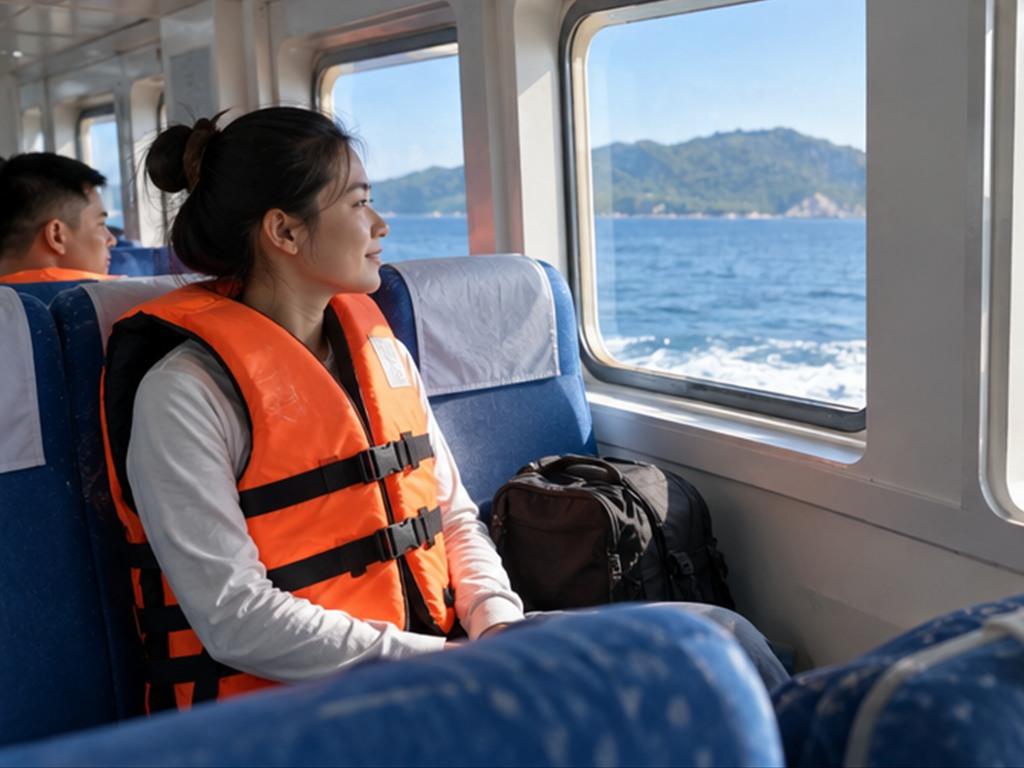
Arrive early so you can find the right counter, and do not push when boarding. Stow luggage where it belongs, sit in your assigned seat, keep the exits clear and listen to the safety briefing. Wear a life jacket when told to, and do not open doors or go out on deck in restricted areas.
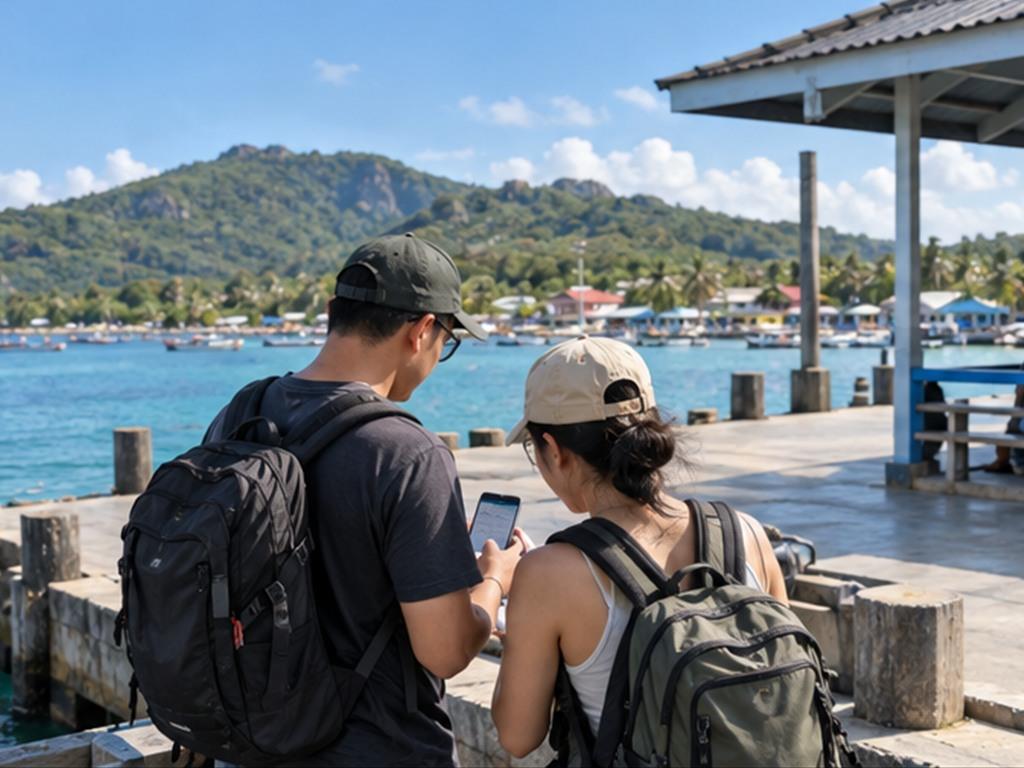
Once on the island, confirm the return sailing and how you will get to the port as soon as you arrive. Watch the weather each day; if there is a warning, changing plans early is usually easier than waiting for the last sailing.
Risks that are usually underestimated
Seasickness can cause vomiting, dehydration and loss of balance. Look at the horizon if you can, avoid reading a screen, use a sick bag properly and tell the crew if you have severe dizziness, chest pain or difficulty breathing.
Do not press a small operator into carrying you when the main service has stopped for weather, if the vessel and the conditions are not assured. “It can be done” does not mean it is safe or legal. Choose to stay put and contact your accommodation.
A turnaround rule should be agreed while the whole group is still calm: if the cut-off time arrives, the weather crosses the threshold, someone is unwell or a key piece of equipment fails, you stop. Turning back is not failure; it is the skill that leaves a next trip possible.
Behaving responsibly towards the place you visit
Do not bring excessive single-use plastic, do not take coral and do not stand on the reef. Use fresh water sparingly, since many islands have limited supplies; carry rubbish to a collection point instead of leaving it on the beach.
Respect military areas, border zones and protected areas, and do not fly a drone without permission. Ask before photographing fishermen, fishing activities or people's living spaces.
A checklist before departure
- Official tickets, the right port, and documents that match the name.
- Confirm the schedule the day before and on the morning of departure.
- A buffer day before a flight or an important commitment.
- A waterproof bag for documents, medication and devices.
- A place to stay if the boat is delayed, plus the operator's and the accommodation's contact numbers.
- Compact luggage, drinking water and a suitable way of dealing with motion sickness.
A plan for communication and for incidents
Send someone who is not on the trip your intended route, where you will sleep, who is coming, your transport and the time you will check in. Agree how long an overdue check-in should be before they call back, contact the accommodation or alert a support service. A short message when plans change is worth far more than many posts after the trip.
If something goes wrong, put people's safety first, call for help and give a location that is easy to understand. Do not move someone with a serious injury unless the place remains dangerous. A first-aid kit is only useful if someone knows how to use it; learning basic skills before a trip always matters more than carrying an oversized bag of supplies.
Travelling as a group without creating pressure
Appoint a leader to coordinate, but every member still has the right to say they are tired, afraid or want to stop. Do not leave the slowest person behind, do not use dares to push anyone past their limit, and always have someone bringing up the rear. A small group is usually easier to manage, quieter and quicker to react.
Share out costs, tasks and expectations from the start: who books, who watches the weather, who carries the first-aid kit, what time you get up and what level of comfort everyone wants. Conversations that seem trivial are what prevent conflict once people are tired.
What should the money go on?
A safety budget covers servicing or hiring good transport, a guide where one is needed, a fallback place to stay, suitable insurance and an emergency reserve. Save by packing light, travelling in a small group and booking with a plan; do not save by dropping protective gear, choosing a vehicle of unknown condition or going against the rules.
Conclusion
An independent island trip does not begin at the pier; it begins with what you will do if the boat is delayed. Weather at sea can change the schedule both out and back, so tickets, luggage and a buffer day have to be counted as part of the journey. Preparing well does not make the trip less of an adventure; it creates the room to observe, to meet people and to enjoy Vietnam without pushing the risk onto your companions or the local community.



 Island-hopping by boat in Vietnam on your own: keeping the plan flexible when the sea turns
 A fair restaurant review: seven questions to answer before you give a score
 A first trek in Pu Luong: pick a route you can manage and walk it responsibly
 Da Lat without chasing sights: a slow three-day plan with room to breathe
 Is a homestay worth staying in? Do not judge by the pretty room alone
 Three days in Quy Nhon: a plan for the sea, a fishing village and a real rest
 Central Vietnam's beaches after high season: quieter, but what should you watch for?
 Checking into a hotel: 12 things to look at before you open your luggage
Đăng nhập để bình luận: / Sign in to comment: